Tuesday, 9 June 2015

"Todo Va a Estar Bien". Entrevista a una Venezolana en Irlanda

I'll go back to Spanish on this ocassion, hopping to translate this very soon so my English speaking readers can get to know this story. For now...

Hace unos días leí un artículo sobre los esfuerzos de una pareja de venezolanos para mudarse a Londres y permanecer allí. Realmente me enganchó y me hizo interesarme en buscar historias similares en Dublín. Luego de contactar por Facebook y acordar reunirnos en un café en City Centre, finalmente conocí a Graciela, una chama de Valencia (Venezuela) que se animó a contarme y dejarme contar su historia.

Como muchos otros paisanos en la isla, llegó en el infame primer trimestre del 2014, época en la que muchos nos sentimos como en una de esas películas de ciencia ficción en las que hay que pasar por un portal que se va cerrando y una vez que suceda será demasiado tarde y los protagonistas quedarán atrapados en un universo paralelo.
No es que Irlanda fuera el sueño de su vida, de hecho, Canadá fue su primera opción pero luego de un error con el papeleo, no quiso exponerse a un segundo y costoso rechazo. Fue entonces cuando la idea de la Isla Esmeralda le llegó durante una feria de posibilidades de estudio en el exterior,
Inicialmente, el plan sería pasarse seis meses estudiando inglés, una habilidad que se le hacía cada vez más necesaria en su trabajo; graduada de Comercio Internacional y con un buen cargo en una compañía de textiles en Valencia, las cosas iban bien, al menos a nivel personal.
Pero el entorno era cada vez menos alentador. Era octubre de 2013 cuando decidió comprar un pasaje y alejarse de la violencia, la inseguridad y tantos otros males que no vale la pena enumerar en este momento.

Arte cinético
A estas alturas la foto de los pies sobre la obra "Cromointerferencia de color aditivo" de Carlos Cruz Diez en el piso del aeropuerto es prácticamente un meme de Internet. Pero quienes recorren la obra con sus dos maletas y un bolso de mano son también artistas cinéticos, o en criollo, del movimiento.
Vía usuarioblog.com

Desde que tuvo su pasaje en mano, Graciela comenzó a planear su estrategia, que involucraba llevarse con ella a su hermano de 19 años (su hermana mayor ya tenía tiempo en Miami).
"Decidí pasar Navidades con mis padres. Les dije que tenía el presentimiento de que esta iba a ser nuestra última Navidad juntos en mucho tiempo", comenta. En la mesa durante la entrevista solo compartimos un latte y un te con leche, como cosa rara, está lloviendo.
"El 4 de enero dejé la casa de mamá y fui a donde papá. Al principio solo quería aprender inglés, pero para este momento ya no aguantaba más", el asesinato de una persona en frente de ella y la vez que dejó de irse de rumba para luego enterarse que unos tipos que el portero no dejó pasar decidieron montarse en un carro y repartir balas al resto de la cola son dos argumentos tan pesados como el plomo que ya no quería seguir temiendo.
Así, luego de "sacarse todas las espinas" y perdonar rencores acumulados, Graciela se despidió de Venezuela en paz, pero sin sentimentalismos. Un amigo la acompañó al aeropuerto, evitándole así el tener que derramar lágrimas sobre una obra de arte.

Qué vas a hacer?- le preguntaba su madre días antes.
Lo que sea-

Los trámites para salir, largos, burocráticos e intimidantes para muchos, se le dieron con rapidez y sin contratiempos, hecho que no tardó en interpretar como una buena señal. Su única reflexión respecto a esta etapa fue la forma en que ella y su hermana mayor manejaron el viaje de su hermano, "Entendía que era lo mejor, pero estaba muy dolido de que hubiésemos decidido por él. Se puso muy triste, tuvo que terminar con su novia y dejar a sus amigos. Nunca le preguntamos qué quería hacer", recuerda.
"Me tomé la correspondiente foto en el aeropuerto y me dije, amo a mi país y mis experiencias aquí. Es chimbo y lamentable pero hoy me despido y espero que Dios y la Virgen me den la oportunidad de volver algún día".


La suerte del irlandés
En inglés es común escuchar la expresión "The Luck of the Irish" ("La Suerte del Irlandés"). Aunque mucha gente la usa para decir que alguien es simplemente suertudo, es un poco más complicado; después de todo, cualquiera con un mínimo conocimiento de la historia irlandesa sabe que se trata de una nación que ha pasado por épocas muy duras. Por lo tanto, la expresión realmente tiene una connotación casi agridulce, es una suerte que solo llega tras superar grandes adversidades, una suerte que se hace esperar.
Por ejemplo, la del inmigrante que dejó todo atrás y cruzó el océano para sobrevivir. Hace cien años eran ellos, ahora somos nosotros. Hace cien años conseguían trabajo en una mina, hoy como cleaner en una cocina. Quizá sí hemos avanzado algo.  
Al poco tiempo de llegar a Dublín, Graciela recibió su primera porción de suerte irlandesa...
"Un chico se ofreció a alquilarnos una habitación a mi hermano, un amigo que estaba con nosotros y a mi. La casa era linda y la zona bonita, nos arreglaríamos los tres con un cuarto, yo con mi hermano en la cama doble y mi amigo en la individual". Sin conocer de precios en la zona, y confiada por tratarse de un paisano, aceptó un precio de 350 euros por persona (para un total de 1050, el precio de un apartamento bien ubicado o una casa pequeña en las afueras de la ciudad).
"Llegamos en invierno y hacía frío. Los landlords eran una pareja de evangélicos venezolanos. No nos dejaban prender la calefacción. Estábamos siempre en el cuarto y para cuando explotaron los peos de febrero, yo estaba todo el día pegada de la computadora".
Confrontarlos solo empeoró las cosas, peleas infantiles la ocupaban en casa, mientras del otro lado del Atlántico el país era fuente continua de cifras de fallecidos, heridos y destrucción.
Decidieron separarse, ambos chicos se fueron a una habitación y Graciela a otra, en el apartamento de una Irlandesa "solterona, desastrosa, que no se le entendía nada". Al menos estaba cerca del centro, agrega.
Y la racha de Irish Luck apenas comenzaba. El instituto donde llegó a estudiar inglés fue uno de los primeros afectados cuando varias escuelas de idiomas comenzaron a cerrar en 2014, dejando a numerosos estudiantes varados sin la posibilidad de sumar la asistencia necesaria para cumplir con los requisitos que exigen para conservar una visa. Aunado a esto, tras los mencionados "peos de febrero", el gobierno venezolano tomó el close de escuelas irlandesas como argumento para suspender la autorización de intercambio de divisas, así que quienes ya estaban acá se vieron sin posibilidades de recibir dinero desde casa, y sin posibilidades de trabajar por la incertidumbre con las escuelas.
"Íbamos a las reuniones con inmigración y nos trataban como perros. Sin CADIVI cambió todo, nos convertimos en un estorbo", concluye al respecto. El golpe fue demasiado para su hermano, quien poco después decidió mudarse a Miami, donde al menos su otra hermana estaba mejor establecida y podía brindarle apoyo.
"Empecé a dejar CVs, a pedir hablar con el gerente. En una ocasión me rechazaron por ser venezolana porque el dueño había tenido otro venezolano que lo había robado". La búsqueda de empleo era una mina y hasta ahora Graciela se había agotado excavando para regresar a casa con el cansancio y nada más.
"A todas estas muere mi abuela", agrega, culpando a los gases lacrimógenos que rápidamente deterioraron su -hasta entonces buena- salud durante los infames peos de febrero,  como llama por tercera vez a la serie de protestas que tomaron al país en dicho mes.
Días antes de irse a Irlanda, recuerda haberle dicho a su hermano "que se despidiera de la abuela porque probablemente era la última vez que la íbamos a ver", sin embargo, la manera en que ocurrieron las cosas hace que el relato se nuble más de rabia que de tristeza.
"Me quedaban 70 euros en el bolsillo, hice mercado y me dio una depresión. Sentí que no puedo".
Por esos días consiguió una entrevista con un pakistaní que conseguía niñeras Au Pair para familias locales.

Dónde vives?- le preguntó el hombre.
Ella comenzó a llorar.
Mi renta termina el domingo y luego de eso no tengo a donde ir- explicó lo mejor que pudo.

El hombre le dijo que la pondría en contacto con una amiga que podría alquilarle una habitación y se ofreció a prestarle lo suficiente para pagar las dos primeras semanas de estadía con la condición de que le pagase al comenzar el trabajo.

No te dio miedo confiar de esa manera en un desconocido?- Salté a preguntarle mientras una serie de flashes pasó por mi mente, como una versión ultra resumida de la película Búsqueda Implacable (Taken).
No me dio miedo, no tenía nada qué perder- responde.

Y finalmente, un pequeño brillo comienza a aparecer. La suerte irlandesa es aliada de la perseverancia y la señora que la recibió esta vez llegó a convertirse en un gran apoyo. "Era un amor, un ángel. Hablaba español y varios otros idiomas, es profesora de japonés. Hablábamos mucho, trataba de darme fuerzas y me contaba sus dificultades, me ayudó a quitarme los pensamientos negativos".
La buena vibra y apoyo moral que recibió en su casa tuvieron un efecto inmediato. "La noche que me mudé a esa casa empecé a recibir correos de familias que querían que fuera su Au Pair. Conseguí una familia en Skerries y me mudé a finales de julio".  

The Simple Life  
Skerries -describe Wikipedia- es un pueblo marítimo en Fingal (condado ubicado al norte de Dublín). Con casi 10.000 habitantes, es un cambio total de ambiente para alguien que viene de Valencia, una agitada ciudad que sobrepasa los dos millones de personas.
Antes de que el pakistaní concretase la oferta de trabajo ya Graciela iba rumbo a la casa de una familia Irlandesa con 3 niños (uno de 3 años, uno de 5 y uno de 11 meses). Como muchas otras Au Pairs, trabajaba por una mesada de 100 euros semanales, de lunes a viernes, de 8:00 am a 6:30 pm, esto incluyendo la habitación y alimentos por cuenta de la familia.
"Aunque no me gustaba mucho el trabajo, la casa era genial, en una colina con vista al mar. Allí pude organizar mis ideas".
En especial algunas de las más desordenadas que rondaban su mente, como la propuesta de matrimonio que un amigo español le había dejado en pie, más por solidaridad y amistad que por interés romántico.  

"Qué estoy haciendo? Yo no soy así. No voy a tomar así una decisión que para mi es importante. Yo no quiero terminar divorciada, soy a la antigua en ese aspecto". Esta reflexión la motivó a rechazar "al amor de su visa". 
Poco a poco la vida en Skerries le hizo recuperar algo de paz interior. "Me puse en manos de Dios y cambié la actitud, dejé la angustia. Fue una oportunidad muy grande independientemente de que me gustara o no, de que me explotaran o no. Mejoré mi inglés como no tienes idea".

Dejar que las cosas fluyan
Unos meses después, en septiembre de 2014, ahora trabajando "live out" para una familia con un chico de 12 años, Graciela volvió a clases para completar las asistencias requeridas para optar a renovar la visa. Vivía en una casa de una habitación, habitada por cinco personas y atendida por un landlord que brillaba por su ausencia (especialmente a la hora de resolver problemas).
"En eso, un amigo se quema el brazo y yo voy a ayudarlo". Como si se tratara de una cuña de ron, una cosa lleva a la otra y los invitan a  una fiesta donde conoce a un chico español con el que comienza a salir "muy poco a poco, llevábamos dos semanas saliendo y no nos habíamos dado ni un beso".
Tras un par de meses, ya la cosa iba más en serio y un día el chico vio las condiciones de la casa en la que vivía Graciela.

"Ahora entiendo por qué estás siempre enfermándote".

Poco después, él le propone mudarse juntos y en esta ocasión Graciela dice que sí. Para Navidades, ambos iban a España a visitar a la familia y a pesar de que la recibieron con amabilidad, la distancia de sus seres queridos hizo resurgir el óxido de la depresión.
Con éste, las dudas. 
Acaso era algo precipitado? Era amor verdadero o la necesidad nublaba el juicio? 
Momento de un reality check. "Este tipo me quiere y es la mejor relación que he tenido". No eran las condiciones ideales, y no era un tipo perfecto, pero la vida no es ni una ni la otra cosa, y Graciela decidió intentarlo.


Todo va a estar bien

"Desde los 16 años trabajo y nunca he contado con apoyo. Yo misma me pagué mi carrera y me gradué, la satisfacción más grande. En Venezuela tenía una vida decente, un buen cargo, un buen sueldo y acá me tocó tirar el título a la basura y limpiar baños. Ese es el destino de los venezolanos afuera" -concluye- "Es fuerte y duele. No es que yo lo merezca más que los demás, pero después de año y medio me afecta seguir lavando baños".
Es un destino común, un tema que entre los grupos de venezolanos en la zona es tan sensible como la parte suave que queda expuesta cuando se muda un diente de leche. Pero aunque a nadie le guste "lavar baños", no es un final triste, de hecho, no es un final en lo absoluto. 
Hace poco, el chico le pidió que se casara con él .

 "Aun cuando yo no creo en el matrimonio, quiero hacer esto por ti, has pasado por mucho y tengo una misión en la vida de hacerte feliz. Aunque para mí no signifique nada, sé que te ayudará mucho", Graciela parafrasea la propuesta, romántica, a su manera.

Tras un sí dado con convicción, el día a día no ha cambiado mucho. Ambos viven juntos, comprometidos por los momentos, Graciela aun limpia su cuota semanal de baños mientras busca un trabajo mejor, pero hay buena vibra y optimismo.

"Regresar no es una opción", comenta. Se le hace fácil ver un futuro mejor en medio de las dificultades cotidianas, hay "luz al final del túnel" y una sensación de que "todo va a estar bien". 
Cuando nos despedimos -tazas vacías desde hace rato- noto un pequeño trébol de cuatro hojas tatuado en uno de sus brazos, un delicado símbolo de suerte irlandesa que la acompaña. Me arrepiento ahora de no haberme detenido a preguntar la historia del detalle, pero me hace pensar que Graciela tiene razón, todo va a estar bien.

Monday, 1 June 2015

10 Times in which Dublin was just like Barquisimeto

It might sound a bit out there, but there are a few things here in Dublin that some how remind me a lot to Barquisimeto, the capital city of a county ("estado") in the west of Venezuela called "Lara". I lived in Barquisimeto for around five years (basically life there shaped my childhood), and in Dublin now for a bit more than a year, long enough to realize a few things about the city's personality.

Via (left pic) estampas.com (right pic) de.wikipedia.org

So, here are ten times in which Dublin was just like Barquisimeto...

Via (left pic) elimpulso.com (right pic) nationalcraftsfair.ie
1. The love for crafts: When you are in Barquisimeto, going to a craft market is a must, especially during craft fairs. People love to get hand made stuff for the house or to give as presents, whether it's knitted stuff, wood carved stuff, little paintings, pottery, etc. This enthusiasm for the local craft is very strong in Dublin as well, and they even take it here to the next level, with many lovely shops in many parts of the city selling hand made items.


Via (left pic) estampas.com (right pic) tripadvisor.ie
2. The country taste: In both cities, dairy farms are not far from the centre and farming is a very important and influential business. This makes for posh hotels and restaurants with a very rural aesthetic, and a preference for a style a little rough around the edges. It's not uncommon for locals to go to nearby rural towns during the weekend, and the idea of a countryside holiday in a nice farm with artisan food is very trendy and valued in both cities.

3. The amount of funeral houses: I have been lucky enough to visit a few cities and just in these two have I've seen so many funeral houses on the streets. They look just like any other shop, with their sign on the door and next to your local bakery or florist. I know that (at least according to Hollywood), Irish funerals are a big deal, and the same goes for the people in Barquisimeto.

Via (left pic) funerarias.com.ve (right pic) staffordsfunerals.com
4. The graveyard as a normal part of the neighbourhood: Continuing in the same line, it is not uncommon for a graveyard in these two cities to be part of the community landscape, but, unlike other places where it's situated far from the people's houses and has a distant and lonely feel, both in Dublin and Barquisimeto, graveyards feel somehow more normal, more like a quiet place that's part of the neighbourhood. 


Via (left pic) tierradegracia.net (right pic) youtube.com
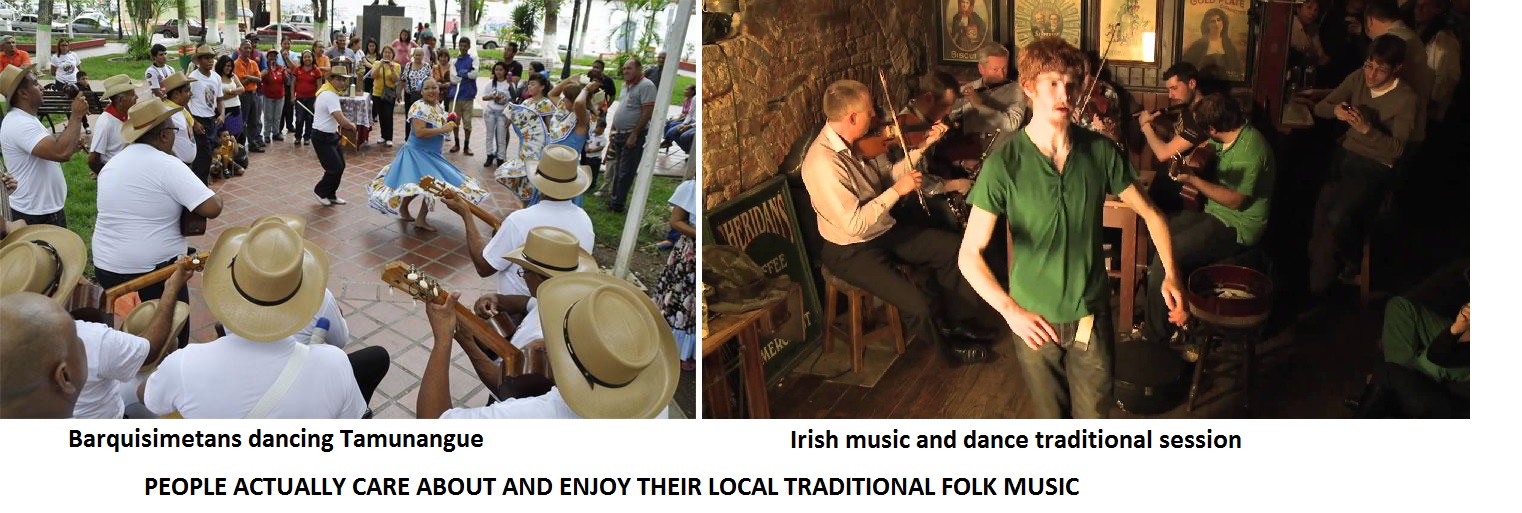
5. The power of music: Venezuelans give to Barquisimeto the nickname of "The Music Capital of the Country", and even though Dublin is already a capital city, the fact is that they both value live music very highly. People expect to hear live music at many occasions, and a remarkably high number of people know how to play an instrument or at least sing decently. And also, even though they both are busy modern cities, they hold folk music in a very especial place, and people actually enjoy listening to it and playing it. Fun fact, Sambil Barquisimeto, a very popular shopping centre, won some major architecture awards and it's in the shape of a cuatro (Venezuelan ukelele-like national instrument).


Via (left pic) es.wikipedia.org (right pic) irelandluxurytours.com
6. The multitudinary religious festival: Both cities gather hundreds of thousands of people once a year for a world-famous religious festival. In Barquisimeto, the day is January 14 and the protagonist is "La Divina Pastora", celebrated with a procession that has counted two million people; in Dublin the day is March 17 and the honoured is Saint Patrick, with a parade that's said to be the national holiday celebrated in more countries around the world (while Dublin's festival counted around 500 thousand people, NYC's had around two million last year).


Via (left pic) laraconsabor.blogspot.es (right pic) foodwallpaper.info
7. The obsession with traditional breakfasts: While Irish breakfast beats Venezuelan breakfast in popularity, if both were competing to determine the one that's a biggest deal to locals, it would be a tie. Barquisimetans love to have the full traditional breakfast on a Sunday, whether at home, or offered in many restaurants like "Desayuno Criollo" (creole breakfast). In both cases, it's as heavy as a lunch and then some more.

8. Big city with village vibes: Even tough they both are big cities (Barquisimeto with around one million people and Dublin with over 500 thousand), sometimes it feels like everyone knows each other and you keep bumping into people you know everywhere (I can't imagine this happening in New York, and certainly almost never in Caracas). In fact, sometimes news travel as fast as in a small town, and someone's last name is still a common way to do a mind check to search for common acquaintances (are you related to the whatever's of x-town? oh! He's my cousin's cousin!). Besides this, people actually go to city parks and squares and despite heavy traffic and busy schedules, you don't feel as stressed or rushed as in other cities.

Via (left pic) taringa.net (right pic) architecture.about.com
9. The Spire and El Obelisco: There's nothing like a tall and thin uninhabited building in the middle of city centre to say "this area is important". Dubliners have the shiny Spire, Barquisimetans have El Obelisco.

10. The people's charisma: Being fun and thinking fast are parts of both cultures. In both cities, it seems like people always have the perfect expression for something, and they're often charged with a strong sense of humour. Both Dubliners and Barquisimetans LOVE stuff that rhymes, and are quick to say a quirky exclamation when surprised or feel like someone's trying to fool them. Both are known for their distinct accent (which stands out even among people from the same country) and for making witty remarks.

Well, that's it. I don't know if it's just me, but I really believe that these two cities have a lot in common. 
Have you been in both? I would love to hear your thoughts on this over the comments!

Saturday, 23 May 2015

Managerial Grid Model, Game of Thrones Version

For some reason, I enjoy filling on line quizzes that tell me which Game of Thrones character I'd be. I've done lots of them and today I found one that was outstandingly different, What Is Your Game Of Thrones Management Style?, on no less than The Wall Street Journal.

In case you're wondering, I got Margaery Tyrell, but back on topic, this test made me think on the different managerial styles as seen in the different Game of Thrones characters.

Then I thought I'd make a grid to describe them; but then, when thinking about management, there are probably thousands of grids around that help describe managerial styles. Turns out a quick Google check made me stumble upon The Blake Mouton Managerial Grid, which apparently has been around since 1964 and defines five main types of management styles based on the concern for production and concern for people.

The graph describes it in a clearer way so take a look...
The Leadership Grid® figure from Leadership Dilemmas – Grid Solutions by Robert R. Blake and Anne Adams McCanse (Formerly the Managerial Grid by Robert R. Blake and Jane S. Mouton). Houston: Gulf Publishing Company, Copyright 1991 by Grid International, Inc.
A quick explanation from the site mindtools.com explores each one of the main 5 styles:

Impoverished Management (1,1): Low concern for the results, low concern for the people.

Country Club Management (9,1): High concern for the people, low concern for results.

Authority-Compliance Management (1,9): Low concern for the people, high concern for the results. 

Middle-of-the-Road Management: Medium concern for the Results and medium concern for the People.

Team Leadership (9,9): High concern for Production/Results, and High concern for People.

A test can be taken to identify more accurately a person's place in the grid (for example, a 3,8 would care a little bit about the results and a lot about the people, while a 7,4 would care well enough about results and kind of about the people).

So now to Westeros... 

Basically, half the characters in the show that have a name worth remembering are some type of leader (it's not called Game of Pillows), so for a practical real life application of the model, let's use the grid to analyse this bunch of imaginary power thirsty crew.

[Warning: Although all efforts were made to keep the next part of the post spoiler-free, traces of plot can be found so please take caution if you're spoiler intolerant or suffer from spoiler triggered allergies]


King Joffrey: He's an Impoverished Manager (1,1) as he doesn't care about anyone but himself, and he's also inept at getting stuff done. As any other 1,1, he is pretty much hated and useless, working for a guy like this is a waste of time.


Renly Baratheon: A Country Club Manager (9,1), this guy has the coolest camp ever set up for his army and he actually seems to care for the people around him. Now, his ability to get results is a different story.


Robb Stark: Another Country Club Manager (9,4) with a bit more of interest in the results, but not enough to make effective decisions. As Renly, he's loved by his team, but his lack of assertiveness makes him waste all this support.


Cercei Lannister: She's a Middle-Of-The-Road Manager (5,5) that cares enough about her team not to find them disposable, but not as much to make her hesitate about sending them in a deadly and relatively unnecessary mission. Regarding the results, she's stubborn and believes she's smarter than what she actually is, and that often makes her take mediocre choices. Also, she's a drunk, which doesn't particularly help the cause.


Petyr Baelish: This Authority-Compliance Management (1,9) couldn't care less about the people or more about the results. Need to break an alliance to get ahead? Done. A key partner has to go so he can get a powerful stranger in debt? Easy peasy. Promises, bows and agreements mean nothing if they interfere with getting the wanted results. 


Tywin Lannister: A milder (probably the only paragraph on Earth with him defined as "milder") Authority-Compliance Management (4,9). He doesn't have any concern for most people except a very small part of his team, and even then, if he has to ruin their day (or life) for his version of the greater good, so be it. As he get things done and is efficient and intelligent, people respect him, even the haters.


Stannis Baratheon: A decent Team Leader (7,7) but not quite a great one. He cares for his people but is awful at showing this in an effective way, and he works towards getting results, but there's always that obstacle that he can't quite surpass. He's one of those guys that work extremely hard and are always under a lot of stress. The fact that he's ill advised and has zero charisma only makes things harder.


Daenerys Targaryen: Another almost-rounded Team Leader (9,6), she cares about the people fully (some might say a bit too much sometimes), and they are crazy about her. She cares so much about what people think that she second guesses herself frequently. The fact that she doesn't have a clear objective also deteriorates her chances of getting results even with all the resources at her disposal (and before you jump at me, is she sailing to conquer Kings Landing? Is she staying where she is to rule for a long time? Is she going to change plans in two weeks and  decide to wander around on a flying dragon freeing all villages in the continent before actually going and claiming the throne?). She has delayed things to pursue results outside her main plan and she has wasted lots of time and resources in the process. This is not necessarily a bad thing, unless you are on a deadline.


Jon Snow: This Team Leader (9,9) deserves the top qualification as he balances a true concern for everyone involved and for the results as well. This doesn't mean his team love him, but most of them are loyal, and the ones who aren't are dealt with in a fair way (or scared into shutting their mouths up and cooperating for the good of the team). He has managed to get out of very difficult situations and he has a proven track record of finding creative solutions.

Agree? Disagree? Completed the Test and want to talk about your results? Comments are the place to :D

Sunday, 17 May 2015

Everything that's wrong with those Minions and why I blame last decade's children movies

After being the annoying sidekicks in two  movies, the despicable minions are getting their own film. As I see them everywhere, and their chipmunky voices play every hour in my free Spotify account trying to brainwash me into paying to watch their big blockbuster, I felt the need to write about them.
Enough is enough. The Minions are the most annoying little yellow thing on screen since Tweety Bird (a.k.a. Piolin, for those who grew up speaking Spanish), they look like someone chopped Homer Simpsons' fingers and pasted googly eyes on them. 


I dislike their voice, their look, their story and most of all, their attitude. But it's seems like everyone finds them so cute and funny... trying to be evil but being so nice that they end up saving the day.


They look like they were designed to become lame Happy Meal toys: so easy to manufacture, so recognizable even with only their cheapest and most basic features... 


In fact, they are so easy to make than anyone can build their own. From cake pops and Play-Dough figurines to jewellery and wedding cakes. It's out of control.

They're so out of control that I goggled "Minionnize Me" and of course, there's an app for that (actually, a few of them). I won't go into more details about this because I already did enough to increase the amount of people in this world aware that they can "minionize themselves". Apologies for that.

But don't get me wrong, I like cute things and I don't discriminate a character for being yellow, but I can't find anything about these minions that I find appealing, new or funny.


And I blame last decade's Disney and Dreamworks films. I know the movie comes from Universal Studios, but those two big players really paved the way for and army of annoying sidekicks to take over...

Until the 90's, it used to be simple. A perfect formula that worked every time with just a little twitching here and there:

The hero had helpful or brave animal companions...


The princess had cute little friendly animals (Mulan was so serious herself that they gave her a little comedian to compensate)...


And the villain had ugly and stupid evil creatures... True minions that everybody loved to hate...


And then, the '00s arrived and we met this guy:


He wasn't your usual minion (and to be fair, this wasn't your traditional Disney movie either). He was dumb enough to be nice while trying to be bad, he had a yellow outfit and a blue apron (sounds familiar? probably a coincidence, but still) and he was more of a comic relief than an actual evil companion. 

Is it just me or do they share more than just their apron choices?
After him, we met a collection of endearing little imperfect characters with an edge. They were all cute enough to be the Toy of the Week, and mischievous enough to fit the trend of de-constructed children movie where princesses were "out" and ogres, aliens, monsters and non-traditionally cute animals being stinky and loud were "in"


If animated movies were a person, the 00's would have been that phase where they were trying to prove that they weren't mommy's little cutie any more. They wore spikes, listened to Rock music and their rooms were a mess. They were trying so hard not to be cute that they stepped on the grass, bought 11 items in the "only 10" till and graffittied their own bedroom walls. What a bunch of rebels they were...

But as with all phases and crazes, the decade passed and the heroes started getting braver and nobler again... Although they weren't perfect any more.


The princesses got more and more fabulous and magical... They even started to sing again! But they weren't damsels in distress just waiting for stuff to happen to them.


And villains kept getting more and more evil. And more complex and charismatic. From a witch that mastered how to induce Stockholm Syndrome, a poor voodoo man that had it rough, a master of Kung Fu turned bad, or a wealthy intellectual criminal with a thing for antiques, they all got to tell a bit more of their story and that was awesome.


So, to me, the minions are a condescending army of left overs from a decade that ended 5 years ago. They're like that character Leo from That 70's Show, lingering around for the laughs, but completely dated in style and attitude. The difference being that Leo was actually funny. But because they are cheap and easy, and a safe bet, they became a gold mine that Universal is not going to drop any time soon.


They are the epitome of lazy laughs, recycled jokes and patronizing children. And the worst part is that so many adults have also fallen for those yellow nuggets. Their mass appeal is clear when they appear in T-Shirts, onesies and accessories outside the kids wear department; when they are not only in mass produced piñata-grade toys but in office supplies, wine charms, ties and stuff that is clearly not marketed to kids. 


They really are this generation's Tweety Bird. And to anyone that likes them and thinks that this anti-minion rant is wrong, please go and minionize yourself.

Tuesday, 5 May 2015

The Meaning of Fruits

Just like there are theories that talk about the meaning of colours, and say that blue is for calm, yellow for joy, red for passion, etc... I know that fruits also have meanings.
Here are a few of the most popular...

Apples: Represent the temptation.
This fruit has been the cause of all type of trouble since the beginning of times. This doctor spookers are a big red flag (it's never a yellow apple, isn't it?) in any story line they appear, and it's always a shady character the one in charge of offering one to the protagonist or the one who's always eating or craving one of this crispy balls of suspiciousness.


Strawberries: So romantic.
A romantic occasion will be enhanced by strawberries, chocolate and Champagne. Add chantilly cream to make it sexy. Strawberries are normally related to girly and femenine stuff, and if an anime show features the word, it's surely kawaii and for girls.


Peaches: Sweet, kind and delicate.
If you bruise like a peach, you'll understand why this fruit is synonimous with softness and being delicate. But at the same time, a peach is so nice that who would actually want to bruise it? You only want to rescue them or make sure they get home safely.


Cherries: XXX.
There are tons of fruits in the same shape and size, and somehow, the cherry is the one that manages to be all winky winky (blackcurrants, raspberries and goldenberries simply don't have it). They might as well be called pornberries, because most times someone is throwing a double entendre with a fruit, it has to be a cherry.


Bananas: For the lols.
It's a very old cliché: someone walking without paying attention, steps on a banana peel and falls. Why is this funny? Because it's not you (yes, people are cruel). This is the fruit of comedy, of being crazy, of funny banana costumes  (it would be as funny to see a melon costume) and bananas for scale in 9Gag just because of reasons. If that wasn't enough to certify them ad the fruit of lols, they are the monkey's favourites (and everyone knows that those are the animals of comedy).


Coconuts: Exotic.
Are you a girl in a desert island? Guess what you'll en up wearing... A coconut bra of course! Do you need to build a reliable radio to contact home and get rescued? Coconuts will be the key to your jungle tech. Even if some people hate to find them inside their chocolate, this sunscreen-smelling, tropical trendy health food transport you inmediately to the Caribbean, where you can relax and drink straing from one of them with a little pink straw.


Melons: Boobs.
Risking to sound tacky: "Melons = ( . ) ( . )". As simple as that. Why this round, beige, soft fruits make people think about boobs? I guess we'll never know.


Grapes: Ego and aristocracy
Wine's main ingredient. They are meant to be served straigth to the emperor's mouth, or rest elegantly in a luxurious fruit bowl in the table of a royal feast.


Pumpkins: Halloween.
Not really a fruit, but this veggie earned a symbolic meaning on its own merit. Before the end of summer, their carved faces slowly start to pop up everywhere, and by late October they are in everything, from your window to your coffee.


Besides all these fruits, other ones have meanings as well: for example, Kiwis are associated with New Zealand, pineapples with Hawaii, and a combination of lots of fruits used as a hat for some reason (see famous pic below) evokes South American culture.


¿Do you know about another fruit with meaning? Please help me expand the list  :)