Wednesday, 7 October 2015

The 10 types of Venezuelans you'll find abroad (at their best and at their worst)

"Life was like a box of chocolates. You never know what you're gonna get." Wise words by Forest Gump's momma. Well, this applies to many things, including of course, meeting people, and in this particular case, meeting Venezuelans abroad.
We might be all chocolates from the same box, but we surely come in very different flavours.
So after thinking about writing this list for a few days, I decided to compile 10 cliches I've noticed when meeting Venezuelans in foreign lands.


"Did you read about what happened yesterday in the Asamblea?" 
1. The one that never left: Yes, his passport has the stamp, his body is in front of you, but his mind is miles away, somewhere around 10°30′N 66°58′W (I've always wanted to quote coordinates on a post!). They obssess about the currency exchange rate and read Venezuelan news constantly, but are unable to mention a current event in the city they sleep in. They belong to dozens of whassapp groups, and spend more hours in social media than socializing IRL.
At their best: They somehow managed to keep in touch with friends and family and found a way to be there for them despite the distance. 
At their worst: They don't enjoy their new surroundings, and are always in their own little bubble.


The sad thing is that they don't exagerate, sometimes they even tone it down (Via visual.ly)
2. The sensationalist: Did they tell you about Caracas being in the world's top 5 cities with more murders per capita? They won't shut up about Venezuela's darkest facts (yes, sadly, facts). Corruption, kidnapping, extorsion, riots, shortages... that time when he witnessed a person getting mugged at gunpoint (or when his car got stolen) is his favorite cocktail ice breaker. This person seems to take a secret and sick pleasure in sharing these tales, almost like if letting you know what they've seen would give them some sort of street cred mixed with victim status. 
At their best: They help to create awareness about all the mess that's going on back in the country.
At their worst: They are downright depresing. 


Hi there, allow me to recommend you some place for coffee (Via reddit.com)
3. The camouflaged one: They look like a local, walk like a local, eat, talk, dress and party like a local so well that they blend in in their new environment completetly. Or so they think. The Japanese have an expression for these people, they call them "Henna Gaijin" which ironically means "strange foreigneer": non-Japanese people who act too Japanese-like. 
Funny thing, in Ireland there's an expression: "more Irish than the Irish themselves", which makes reference to the cultural asimilation that foreigneers experience in the island (the Irish lifestyle is hard to resist, with the exception perhaps of crisps sandwiches).
At their best: Turns out they are legit, they adapted and are true locals to their new community. 
At their worst: They are faux locals trying too hard. They come up as pretentious and artificial.


A fine example of this type, Edgar Ramirez (centre) Via ladepeche.fr
4. The overachiever: Whether they are directing orchestras, discovering the cure for some disease, winning gold medals or helping launch rockets into space, these Venezuelans are celebrated. They are shinning abroad, putting their PhDs and creativity to good use in a country that has given them the opportunity they never had at home.
At their best: They are role models that make us proud and show us that the great ones weren't all born in the XIX century.
At their worst: Run away from the ones whose success is seasoned with arrogance, especially if they are good with social media.


Dmitri: Here I am janitor. In former Soviet Union, I am physicist; Leningrad Polytechnica - Go Polar Bears. Via bigbangtheory.wikia.com
5. The overqualified kitchen porter: A degree from a top university, postgraduate studies and fluency in three languages. This one should be mingling with the academic elite or wolfing their way to the top in a corporate environment right? But then, something happened, and they never found that golden job yet they still needed to pay rent. 
There is an episode in The Big Bang Theory, where the guys participate in a physics knowledge competition and, missing one in the team, they recruit Dimitri, the Russian janitor. Turns out the guy was a physicist in the Soviet Union and he knew the answer to a question not even Sheldon got right. Well, they point is, this one is our Dimitri.
At their best: They are educated, resilient and hard working, with a rich inner life, aware that their jobs don't define who they are.
At their worst: They are bitter, jaded and jelous of everyone whose job doesn't involve a sink.
6. The leech: If life was actually a box of chocolates, they would be the one filled with a pink chewy cream that tastes horrible. They're our rotten apples, the bullet on a game of Russian roulette, the rabid dog that bite the hand that feeds. They're the reason why we don't trust each other. They're the ones that steal from the till at work, that will take your bike, that run shady businesses and scams. They are the ones that will do anything to get rich, except working.
At their best: Can't find anything good about them... perhaps that they force you to be extra nice, to compensate for their parasitic ways.
At their worst: They give us all a bad name, and make life harder for the ones trying to do things right.


It's a beautiful day for a wedding (Via allthingsburton.tumblr.com)
7. The impoverished sifrino: In case you don't know, a "sifrino" (see-free-noh) is a posh guy (sifrina, a posh girl) that lives a priviledge life, often criticized for being clueless and caring little for others. They might not have the best education, but they probably went to the most expensive college (and partied their way to a completely unpractical degree). Now, in a new country, far from mom and dad (this made worse by the fact that it's nearly impossible to legally send money abroad from Venezuela) they're a bit like those aristocrats that ran out of money but try to keep the illusion of being rich for as long as possible. 
At their best: They become humbler, kinder and nicer, and they grow as a person from their experience.
At their worst: They are horrible at managing their money and if they don't find a good salary soon or change their ways, they'll end up reluctantly going back home or becoming leeches.


Via ibc.org.br
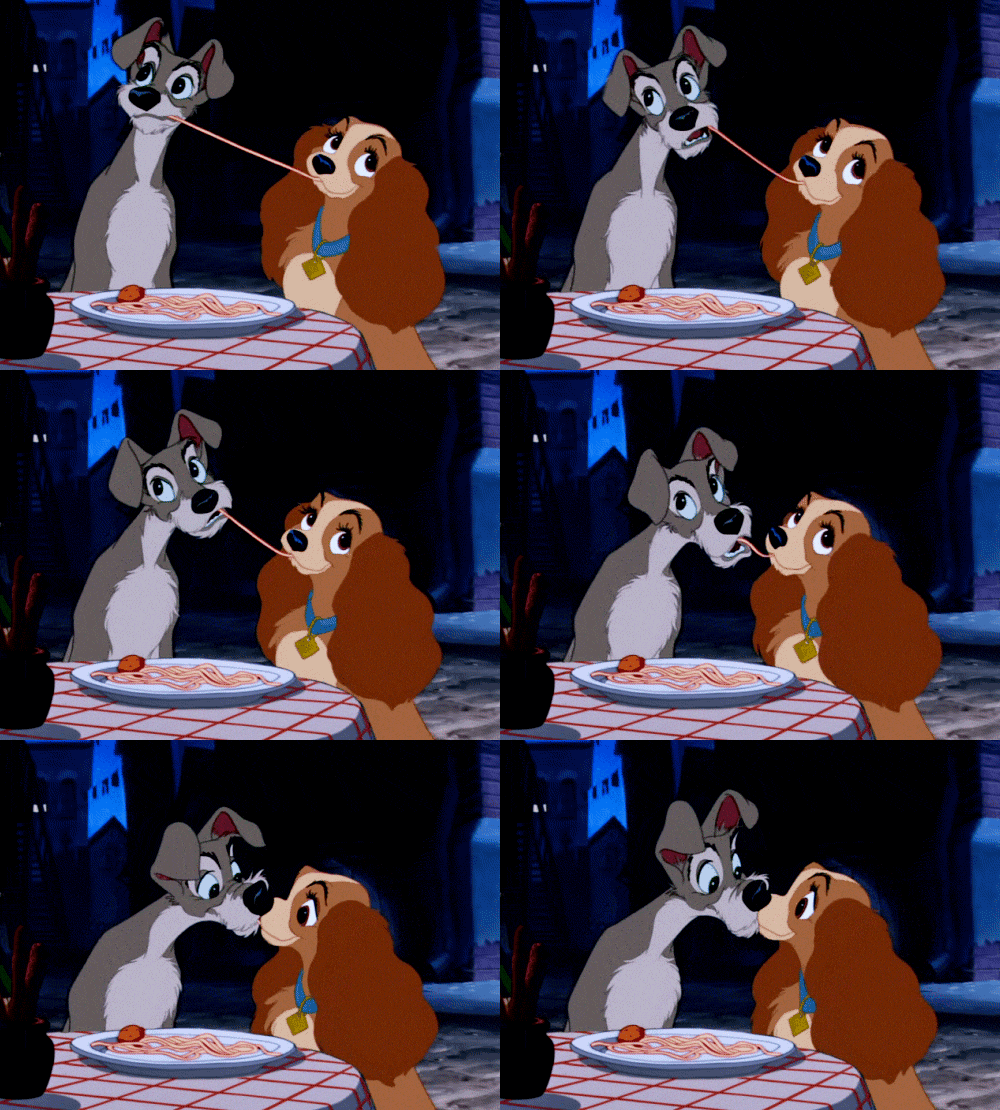
8. Everyone's friend: They are the life of the party. Warm, happy, optimistic and charismatic (very often they are seriously good looking as well). These guys and girls will cook arepas for you, teach you how to dance salsa, and tell you all about the beautiful beaches, mountains and landscapes of Venezuela. They might even share with you a fancy bottle of rum that they brought for a special occasion. They are always smiling and they always give you a little kiss on the cheek when they greet you.
At their best: They are great fun, their friendship is real and they will be there for you no matter what. 
At their worst: Turns out they are too nice for their own good. They get scamed easily (sometimes by a shameless leech) and can move to the dark side if they hang out with bad influences.


"I'm ready for a pint" Via hotelfotosdelpersonal.blogspot.ie
9. The identity overcompensator: When they were living in Venezuela, they used to listen brit pop, eat sushi as often as possible and dress like a character from an American sitcom. And suddenly, they're far and they develop this absurd nostalgia about traditions they never participated in, food they never cooked, sports teams they never rooted for and beautiful landscapes they never visited. They wave flags like they never did before, pay ridiculous prices for smuggled Venezuelan candy and slowly become a theme-park version of Venezuelaness.
At their best: They don't harm anyone and they get to show people a thing or two about Venezuelan culture.
At their worst: You can't help but feel they're faking it. Nobody likes malta THAT much.


10. The one that reminds you of yourself: Here you were, thinking that you were the only sane person holding a Venezuelan passport and then you meet each other. You both are kind, normal people, with flaws and dreams, working hard to make it in another country. You both kept some traditions and adopted a few new ones. You make plans to spend Christmas together and go to each other's birthday. You don't speak Spanish unless everyone in the room does too (but sometimes a comment or joke here and there finds its way) and you slowly gained each other's trust.
At their best: You become very good friends, you understand each other and support each other. 
At their worst: You get competitive and mess things up. You play in the same league, but what could have been teamwork, becomes rivalry. Such a waste.

I can say I've meet at least one of each.

I can also say that I've been a little bit like all of these types.

Except for the leech. Feck leeches.

Wednesday, 30 September 2015

10 ingredients wildly popular in Ireland that are originally from Latin America

I'm on a streak of writing about food and after listing my newly acquired Irish eating habits, and letting you know about some relatively unkown facts about Venezuelan food, I started to think about the many ingredients that we share and I realized that there are lots of Latin American ingredients that are iconic in Irish food.
Some of them are probably no surprise, but you'll see a few unexpected apperances...

Via two-views.com
1. Tomatoes: A must-have of the irish breakfast, this fruit (yes fruit) was once thought to be poisonous. Grown first in Central America and western South America, it was already in the Aztecs' diet around 500 BC. It arrived to Europe around the XVI century and slowly grew on the local palates. 
The Irish way: As mentioned, rosted in the Irhish breakfast, but also in salads (everyone seems to love the cherry tomatoes) and rolls. 


2. Turkey: This bird, native to forest of the north of Mexico and the United States is one of the most popular poultry options (I'd say the second best seller, after chicken) and also, one of the most awkwardly named creatures you can eat: Europeans who discovered tought it was some sort of guineafowl, which they usually got from Turkey (the country). Then they started calling it "Turkey fowl" and then just "Turkey". By the way, in Turkey (the country), this bird is called "Indian" (perhaps in relation to its original French name coq d'Inde or rooster of India, which makes sense as Europeans kind of though America was India when they first arrived), and Indians (the people) call Turkey (the bird) "Peru". In Peru (the country), the bird is called "Pavo".
The Irish way: The ultimate diet meat, as it's lean and has lower calories than other meats. Have it in wraps and multigrain sambos, or go classic, and serve it Thanksgiving-style (more American than Irish but relatively popular here anyway) with stuffing and cranberry sauce.
Serve it differently: 


Via livepuntamita.com
3. Cocoa: Despite popular belief, cocoa -which as you know is the main ingredient of chocolate- wasn't originated in Mexico (although you have to give it to the Aztecs, they were the ones that made it a big deal for the first time), but in the Amazon region in South America (Venezuela, Colombia, Brazil). It made its way to what's now Mexico and then Spanish conquistadors took it back home where, unlike the tangy and bushy tomato, it became an instant hit.
The Irish way: The Irish are obsessed with chocolate. Every occasion has its own shape to eat it: Valentines's Day (red heart shaped), then Easter (egg shaped), then Mothers' Day (pink heart shaped), Halloween (spooky themes shaped) and of course, Christmas (rose shaped for some reason). Besides that, it's used for all types of sweets and confectionery such as chocolate digestive biscuits, rocky roads, brownies, etc.


Via blogs.disney.com
4. Corn: a.k.a. Maize, this grain was domesticated in Mesoamerica during prehistoric times, it is kown to have been eaten at least 7000 ago in Mexico. It was so important that it became part of people's identity in many Mesoamerican cultures. The Mayans even believed that they were literally made from corn.
The Irish way: Almost exclusively two varieties: sweetcorn and popcorn. It is enjoyed mixed with tuna (really?) and in sandwiches and rolls (no self-respecting deli is complete without this ingredient). The popcorn type is commonly eaten not just in the movies, but as a prepacked snack in several flavours (lovely!), seen as a lighter alternative to chips.

Which takes me to...

Via fromchinavillage.com
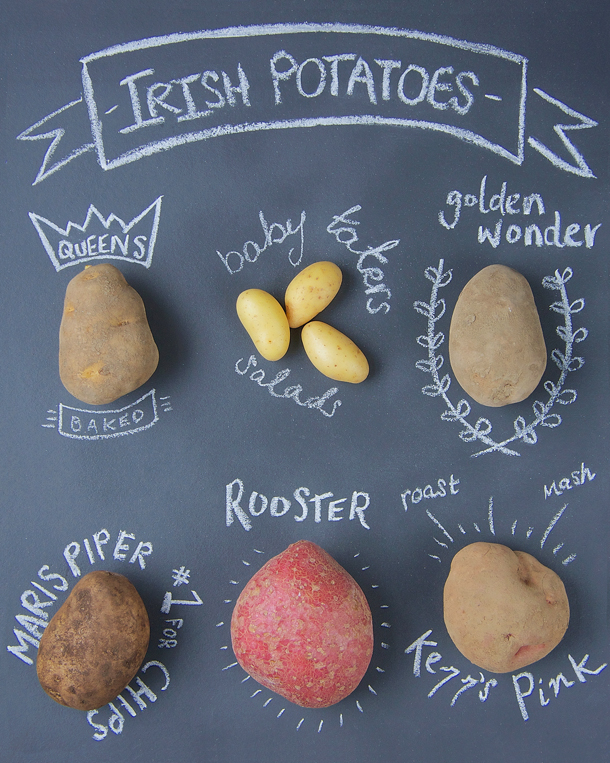
5. Potatoes: I can't imagine Irish food without the potato. Which makes it easy to imagine it has a legendary Celtic origin or that ancient tribes harvested it and discovered its many uses. But in reality, the spud is Peruvian (and from the north of Bolivia) and it was cultivated at least 2.500 years ago (some say 10.000) by native peoples. It arrived to Europe through Spain in the XVI century and a few decades after it was growing in Ireland.
Its lower spoilage rate compared to other foods, its cheapness and its filling quality made it one of the main produces in the island. With millions of people eventually becoming dependent on the potato for food, and due to economic and socio-political circunstances unable to feed from anything else, the mid XIX century potato blight was devastating in the country.
More than a hundred years have passed and even though it will never be forgotten, things have change, happily for the best. And even though today, you can find food from all over the world in Ireland, the simple potato is still the most popular ingredient around.
The Irish way: Crisps, chips, smashed, baked, roasted, stuffed, in wedges, just the skins with bacon and cheese... (I'm starting to feel like Bubba from Forest Gump when he talks about shrimps)... It's only a matter of time to have potato ice cream and smoothies.


Via cavesbranch.com
6. Vanilla: You hear things like "French Vanilla", "Madagascar Vanilla" and "Tahitian Vanilla", so you might think that it's original from some of these places. But nop. It's Mexican, and its name means "small pod" ("vaina" is Spanish for "pod"). By the way, normally you see it as an extract or with luck, as thin black sticks, but it comes from an orchid (V. Planifolia). By now you won't be surprised if I tell you it was cultivated by the Aztecs and briught to Europe by the Spanish, but it might shock you that the majority of the vanilla-things you eat are actually flavour with artificial substitutes, as real vanilla is the third most expensive spice in the world (topped by cardamom and saffron). So if you want the real vanilla, check your ingredient list carefully and be prepared to pay.
The Irish way: A touch of vanilla syrup in coffee, or as flavour in custards, ice creams and sweet creams... Prety much the standard global way to use vanilla, though.


Via wileynutritionbytes.com
7. Peanuts: The most popular nut in the world, which is actually a legume, was domesticated and cultivated first in North Western Argentina (some say Bolivia, proably both as there were no borders in prehistory but that is not of my business). 
The Irish way: Peanuth butter bonanza! Smooth, crunchy, organic, with chocolate... in here, people literally buy it in buckets for home consumprtion (well, not everyone, but I see them in shops not meant for wholesaling so). Also salted or cevered in flavours.


Via seriouseats.com
8. Pecans: These tasty nuts come from the North of Mexico and the South of the United States. Both countries are still the biggest producers nowadays.
The Irish way: You'll find it on plenty of confectionery (commonly mixed with maple syrup) and salads. Sometimes if you're fancy, with turkey (the bird) or chicken.


The next two are not as traditionally popular in Ireland, but they are very trendy, widely available and I decided to include them in the list because they are tasty, healty and becoming bigger as I write.


Via cupofjo.com
8. Avocados: With the scientific name of Persea americana, it is clear that this green fruit (yup, just like the tomato, so basically guacamole = fruit salad) comes from the "new world", more especifically, from East-Central Mexico. Oldest evidence of avocados in the area are up to 10.000 years old.
The Irish way: Try to find a brunch menu in Dublin without Avocado on Toast, come on, I dare you. Besides that, lots of burrito places have it as guacamole, and some healthy delis offer it as well. It's becoming more and more popular by the day.


Via alterecofoods.com
10 Quinoa: This grain that is actually a pseudo-cereal (what's with this deceiving food pretending to be vegetables and nuts and grains?) which originated in the Andean region (Peru, Bolivia, Ecuador and Colombia). Depending on who you ask, it's been known between 3.000 and 7.000 years ago. Since it's filled with most nutrients than other grains (or psuedo-grains), and it's very versatile (kind of like couscous), it is becoming a very popular ingredient, especially for the health and nutrition oriented foodies.
The Irish way: Find it at an absurdly expensive price in health shops and healthy restaurants. Commonly served in salads.

Again, some of them come as no surprise, but I find really cool that lots of Latin American ingredients have become part of the Irish diet and tradition, some recently, some centuries ago. 
And they are all so tasty and good for you! Yummy :D

Friday, 25 September 2015

5 eating habits I've picked up in Ireland (and 5 that aren't going to happen)

When in Rome do as the Romans do. 
That centuries old phrase never gets old and it's been one of my mottos since moving to Ireland. Not just because I feel that integrating to the local life is important, but because I've found that what Romans do here is usually great fun.

Via rte.ie

On this occasion, I'll focus on food and drink, and I'll share five habits that I didn't have in Venezuela and that are part of my everyday now, and five that I can't just get.

So, let's start with the adopted ones:

1. Ordering take away: I used to think that take away was just for pizza, and if I wanted to get chinese food, sushi or whatever, it was a waste of occasion to eat it home, as I like the idea of dressing up and going to a place, eating in and not having to clean up or worry about anything. However, that amount of places here especialized in take away foods (with no tables, just a counter), made me change my mind. Besides, on colder days, you still want to eat something different (by that I mean cooked by somebody else), but you're already in PJ mood.

2. Go to the pub: In Venezuela, most people that go out for drinks do so in places with loud music and dance floors. The idea of a place where you just sit and have a pint is relatively unusual (perhaps recently a few places are introducing it but if there is no loudness and dancing, the mainstream public is not really in). And yes, there are bars in Venezuela but either they are the 5 Star Hotel ultra fancy/expensive ones, or the shady ones where things can end up Dothraki wedding style. Not my thing. Is it too much to ask for a nice, clean place where you can sit and have a chat with friends over a couple of beers, with some decent food and feel safe? Not in Dublin, where there are hundreds of places like that. Nice.

Via glenmcclure.com

3. Online grocery shopping: Best thing ever. Don't get me wrong, I love grocery shopping, but in the last few years before moving, shopping in Venezuelan supermarkets became sad and scary (shortages, military control, absurdly long queues, etc). This still breaks my heart, but back to topic: the fact that I can get all the food I want with minimal effort is amazing, and even if I go in person from time to time, if I'm having a very busy week, I just buy my food online and it's here the next day. 

4. Having darker beers and/or craft beers: In Venezuela, we drink mostly lagers and it's ok. Under the tropical sun at 30 degrees you wouldn't feel like ordering the back stuff anyway. But here, the amount of options made me realize that these light golden beers are not really the ones I like the most. Now I usually get a red ale or pale ale. Cheers!.

5. Eating ice cream in the winter: The first time someone sugested we get gelato while walking on Grafton Street during a cold winter day I was puzzled. I thought they were joking. But you know what, who cares, there's heating everywhere and it's a great treat to hold while Christmas window shopping (did I mention that Christmas here starts in early September? Which I LOVE).

Runners up: Sandwich for lunch, eating scones, going to discount supermarkets, eating cheddar cheese, boil in the bag rice, using teapots.


But I won't lie, not everything has been so catchy for me, and there are a few things that I still find odd, or just plain unpleasant.

1. Having chips or chicken with pizza: chips with pizza? really? Besides it being a carbs overdose, just doesn't make any sense. Nor I understand the point of adding chicken as a topping to pizza. For me, it ruins it. Sorry not sorry.

Via glutenfreeadventuresandme.co.uk
2. Ordering fried chicken in an "Italian" takeaway: The one thing that I just don't get about takeaways (which as I stated in the first part of the post, I love) is how so many places advertise as "Italian" and they are actually a mix of pizza, kebabs, chinese and fish and chips. Mamma mia, WTF! I used to look for risotto or lasagna on their menus unkowingly of the situation, but now I see that if I want real Italian food, I better go out or make it myself.

3. Drinking energy drinks and sports drinks without doing sports: I see them in the bus, in shops on the streets... Seems like everyone likes to drink these drinks instead of plain water. Now that I think about it, I don't see many people drinking just plain water. I don't like energy drinks, and I just don't see myself adapting this habit.

4. Breakfast rolls: This bomb ussually include the ingredients of a traditional Irish breakfast (which is awesome), but all squeezed together in a half baguette (which is just too much). I'm not a vegetarian, but there is something about a roll filled with rashers, black pudding, bacon, sausage and butter that doesn't feel right to me.

5. Brunch at 2pm: Brunch is a word that combines "breakfast" and "lunch", so logic would dictate that is done between those hours (I like it around 10 or 11 am). But noooooooo, not in here. Not even the restaurants are ready for brunch in the morning (most open at noon). So if you have it at lunch time, then why is it called brunch? Is just lunch. Just luch. Really. 

Runners up: crisps sandwiches, tomato soup, rocky roads (and many candy-covered traybakes), 

Are there any eating habits you've adopted after moving to a new country? 

Tuesday, 8 September 2015

The ultimate guide to finding Venezuelan food in Ireland

Venezuelan food is relatively unknown outside Venezuela, and even though this is changing and in the last few years many Venezuelans have opened different types of food businesses all across the globe, it's still hard to find in Ireland.
Unless, you know where to look.
Gathering information from social media (mostly Facebook) I compiled this list, which is a work in progress (please contact me if you'd like to be included or know something that should be noted). In here, I hope to help you find the different options that several Venezuelan cooks, entrepreneurs and bakers are making fresh in the emerald island.

Comida Venezolana Take Away
Description: Homemade vegan traditional Venezuelan cuisine. Especialises in typical menu (pabellon) with vegan mechada (shreded seasoned veggies).
Contact: 083 161 7125
Delivery: Yes.

More information

Como en Casa Venezolana
Description: Seasonal Venezuelan food, especializes in Christmas food, in particular, hallacas (cornbread stuffed with beef and pork sweet & savory stew).
November and December only.
Contact: 083 457 1169
Delivery: No.
More Information

Sabanero Venezuelan Artisan Cheese
Description: Traditional Venezuelan-style hard and semi-hard white cheese and "suero" (salted buttermilk) made with natural ingredients in Galway. They also make  ready to cook cachapas (sweet corn flat bread) dough.
Contact: 089 441 7292
Delivery: Meeting point in Dublin's City Centre, delivery can be arranged.
More Information

Sabor & Garlic
Description: Traditional and modern Venezuelan dishes, catering service. Made by Venezuelan chef Nestor Montes.
Contact: 085 281 9663
Delivery: Take Away (meeting point agreed).
More Information

Caro's Food
Description: A mix of international food and Venezuelan specialities. Novelty and wedding cakes, traditional and gluten/sugar free sweets and confections. Catering and finger food (including tequeños a.k.a. Venezuelan cheese rolls).
Contact: 085 281 9663
Delivery: Take Away (meeting point agreed)
More Information

Gachi Cake
Description: Homemade cakes, novelty cakes, quesillo (flan), tres leches cake, arroz con leche (rice pudding). Also, Venezuelan-style finger food (including tequeños a.k.a. Venezuelan cheese rolls).
Contact: 083 193 0873
Delivery: Take Away, delivery can be arranged.
More Information
Al Punto Snacks
Description: Catering for events of all sizes. Venezuelan and Latin American style finger food, canapes and pastries.
Contact: 087 386 6683
Delivery: Yes.
More Information
Merengue
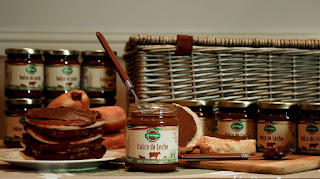
Description: Venezuelan and South American style sweets, biscuits and confectionery. Especializes in dulce de leche (arequipe, cajeta, milk caramel spread).
Contact: 086 371 2096
Delivery: Can be arranged.
More Information

Bonus Points!
While compiling this list, I ran into another interesting food business, not exactly Venezuelan, but nearby (Brazil).

NutriQuick
Description: Balanced, natural, protein rich ready to eat meals, especially created for people with active lifestyles.
Contact: 089 982 1038
Delivery: Yes.
More Information

More bonus points
Also, there are some Dublin based businesses with Venezuelans cooking, that have allowed them certain room for creativity, so you might find an occasional taste from home in the menu.

Sasha House Pettite: Cafe, deli and bakery where Eastern European and French influeces converge, and thanks to the pastry chef Nancy Dayana, you can find some Venezuelan and Latinoamerican style treats every now and then. Her eclairs have been praised by local experts, including a great review from Lovin Dublin.
More Information

KC Peaches (Nassau Street): Cafe and restaurant/wine cave, with an international mix of offers. Venezuelan chef David Ochoa is behind a Venezuelan Night where traditional food is served and paired with the restaurant's wines.


Finally, as I said in the beginning, this is a work in progress and, if you'd like to be included in the list (or know a business that it's not here and should be) please let me know! 
Whether you're...
A chef of pastry chef slowly sneaking Venezuelan recipes at your workplace's menu, 
An entrepreneur trying to launch a product or selling it at farmers markets and through social media.
A person who simply loves cooking and sells some tasty, well made homemade goodies.
Please keep in touch. Venezuelan foodies in Ireland say hi!

Sunday, 30 August 2015

Here are some other affordable places to let in Dublin...

This week an ad in Daft.ie went viral. It offered a house for rent in Dublin for 450 euros a month. "would suit a small professional", it said... Barbie sized, they meant, because it was a doll house.
After that, I started finding some similar parodies in Facebook and other social media and no wonder why: renting a room (renting in general) in this lovely city is expensive.


So, here's a short selection of famous small rooms, and how they would feature in a local "To Let" ad... The places might be fantasy, but the prices are the real deal.


1. Donnybrook. Room to Rent - €200 Weekly
Cozzy room in a large house, bills not included. Will suit a young professional or student. Close to a part of the house that has a window (sunlight not included).


2. Kilmainham. Room to Rent - €450 Monthly
Friendly hard-working lizard is renting a double room in the top floor of the house. Will suit a human couple after a bite or two of shrinking mushroom.


3. Inchicore. Bedroom to share - €300 Monthly
Lovely one bed cottage, walking distance to city centre. I'm looking to share my room with a nice, quiet student. No toilet in-house, but lots of parks nearby.


4. Phibsborough, Dublin 7. Barrel to Rent - €450 Monthly
Conveniently located, within walking distance to City Centre (you can even wear it as you go), and with an independent entrance, this place will suit a young professional or student.
We do not accept rent allowance.


5. Naas. Gingerbread bedroom to Rent - €350 Monthly
Freshly baked, beautifully decorated. We are offering a double bedroom in this elegant purpose-built gingerbread house. Will suit a gingerbread man or couple. Tasting recommended.


6. Smithfield. Box to Rent - €650 Monthly
I'm looking for a non-smoker, quiet flatmate to share my box, located in a very creative area of the city, ideal for a creative or artistic person (that has a full time job please). No pets allowed, all bills included. 


7. Ranelagh. Hole in a Peach to Rent - €125 Weekly
Just 2 min. walk to the LUAS, near cafes, restaurants and supermarkets (the peach is actually in a dumpster shared by several trendy places). 


8. Tallaght. Bed in room to Rent - €200 Monthly [BER G, so no electricity after 10 am]
Lovely student accomodation within commuting distance to Dublin, parking space and plenty of local amenities nearby. We are looking for a 9th person to share a septuple room. 
No allergic people please.  


9. Parnell Street. Studio apartment to Share - €500 Monthly
Cozy, modern flat just 1 min. walk from the Spire. Strictly no-smokers.


10. Bray. single room to Rent  - €300 Monthly
Hi guys, I'm leaving my flat next week. It's located by the beachside, a total must see. Beautiful scenic views and eco-friendly design. You'll love it.


No hermit crabs were harmed in the making of this post.

Sunday, 23 August 2015

15 Things you might not know about Venezuelan food and drink

I love talking about food and quite often people ask me what's Venezuelan food like. For this list, I'm going to focus in a mix of the traditional, the day to day, and the odd. And even though I'm not planning to dwell on the current food shortage, it's worth a mention and a link, in case you're interested in learning (or want to show it to somebody).
So...

1. Venezuelan food is not spicy
Our national chili is called "Aji Dulce" (sweet chili) and it's rated close to zero in the Scoville Scale (a meassurement of pungency a.k.a. spicy heat). Even food served in Peruvian or Mexican restaurants in Venezuela is made milder or has the hot sauce served separately because 99% of us just can't take it.


2. Venezuelans eat LOTS of pasta
It is not surprising than the biggest pasta-eaters on Earth are Italians, but, did you know that Venezuelans come second? According to the International Pasta Organization (2013), we earned the silver medal in spaguetti eating (in case you're wondering, Tunisia, Greece and Switzerland made it to the rest of the top 5).


3. People add sugar to nearly everything
I'm not saying this to brag, but I don't mean just to desserts and coffee, we add sugar to lots of savoury recipes such as bolognese sauce, shreded beef, chicken and pork. Sometimes this sugar is in the shape of "papelon" a.k.a. "panela" or "rapadura", which is basically a brick made of raw sugar we slowly eat and drink. And if it doesn't have sugar, at least on of the "two veg" on the sides is sweetish (like fried plantains or sweet potatoes).
It wouldn't be the same without the sweetness of the plantains


4. We have some odd sushi
Sushi is considered a "chic" food, and lots of people feel fancy when they have it, but not everyone appreciates real sushi, so you can find rolls with cooked chicken, with beef, or cooked fish (we also have the real ones, no worries). There's also the trend of making the rolls more tropical, so expect lots of avocado, mango, and even fried plantain.
Via https://www.pinterest.com


5. There are Venezuelan wines, and they're good
The main company in the wine making business is Bodegas Pomar, and since 1985, they work to create local wines in a western region near Barquisimeto. They make still and sparkling wines and also sangria. Because it's very hard to export and the quantities are moderate, these wines are virtually unknown abroad.
Venezuelan Vineyards. Via http://www.panamericanworld.com


6. The hot dogs are out of this world
They should be called hot wolves, as they are the undomesticated version of the famous street food. When a Venezuelan asks for a hot dog "con todo" (with everything) they mean it. Double sausage? Sure! Sweet corn? Of course! Mini chips? Carrot? Cabbage, Parmesan cheese, bacon, mixed leaves, tomatoes, onions, alfalfa sprouts? If it can be shreded or chopped, it's a hot dog topping.
Via http://venezuelaparaelmundo.com


7. Angostura bitters were invented in Venezuela by a German doctor
That extra touch that takes many cocktails to the next level was created for medicinal purposes by Dr. Johann Gottlieb Benjamin Siegert (1796-1870), who was surgeon general in Simon Bolivar's army. Years later the company moved to Trinidad and it eventually became a globally known product.
Via http://ohgo.sh


8. Cocoa was actually originated in Venezuela
Even though many believe cocoa was originated in Mexican lands, recent research indicates that it was born in the upper Amazon region about 10,000 to 15,000 years ago, particularly in the proximities to the Orinoco river, from which it would eventually had made its way to the Aztecs (who, of course, made it spicy).
Do you want it with chilli? No thanks, I'll have mine with mini marshmallows


9. Even the cheap Venezuelan rum is fancier that most foreign rums
In Venezuela, just for a bottle of distilled sugar cane spirit to be legally called rum, it has to meet several requirements, including the need to be aged for at least two years (one of the longest aging laws for rum making). This means that even the cheapest Venezuelan rum is aged and meets a strict quality criteria so, read the label carefully: if it looks like rum but doesn't say rum anywhere, it's probably a sugar cane spirit known as aguardiente, but if it says rum, you're in for probably the best rum you'll ever have.


10. There is only one Korean restaurant in the whole country
Despite being so popular in many countries, there is only one Korean restaurant in Venezuela (please correct me if I'm mistaken). It is in Caracas and it's called Din Din. I've never been there but I've heard it's pretty good.
Via https://www.degustavenezuela.com

11. We have some odd acquired tastes...
Once a Romanian coworker saw me eating sliced green mango with salt and lime juice and she looked at me puzzled. I wonder what she'd have thought if she saw me enjoying a golfeado (local bun similar to a cinnamon roll) covered in fresh cheese, or if I was dipping McDonald's fries in ice cream, or having black beans generously sprinkled with sugar (see point 3 of the list), or diping a corn bread called arepa in suero (fermented milk). And that is without going Amazonian (which is great if you've ever wondered what spiders taste like).
Via http://zuvanguardia.webnode.com.ve


12. ...And an intense relationship with street food
Very often, people will play the food poisoning lottery and eat street food that deep down they know it's suspicious. Shrimp chowder in the middle of a rural road with no access to fresh water? But it smells so good... Homemade marinated raw seafood sold by walking traders in the beach at 35 degrees? Yummy! Ice sorbet or raspado made by a guy with no gloves handling cash and cutting a block of ice that's been exposed for a couple of hours? Mine lemon-flavoured please. It's a bit Russian-rouletty but people still think it's worth the risk as these foods tend to be SO good. We even call asquerositos (little disgustings) to street hot dogs, but the name doesn't detracts us from enjoying them.
Allergy information? Why would you want to ruin the surprise? Via http://elaragueno.com.ve


13. Arepas are our go-to convenience food
These round and flat cornbread sandwiches can be filled with anything you want. They are quick and easy to make at home, but you can also buy them in places called areperas. They're cheaper than a fast food hamburguer, fresher and more natural. Venezuelans love to know if you have tried them, and if so, your thoughts on arepas (especially if you are a tourist or a foreign friend). Consider yourself very well-liked by a Venezuelan if treated to homemade arepas.
Via http://pattgb.blogspot.ie For the recipe and lovely illustrations see here

14. We have a German-style town famous for its food
A few kilometres away from the Caribbean sea, you won't expect to find a place like Colonia Tovar, a town founded in 1843 by a group of inmigrants from Baden (which then became part of Germany). The place, hidden by forests and mountains, remained virtually isolated for decades, allowing them to do their thing and keep it German. Venezuelans from all regions enjoy visiting this town and having sausages, strudel, strawberries, peaches, craft beers (they even have an Oktoberfest), and walking by the streets full of artisan food stalls. Some of the biggest producers even distribute their goodies to several cities in the country.
Via https://commons.wikimedia.org


15. Our cuisine is one of the most diversely influenced in the world
Besides the native South American heritage, mixed with African and Spanish during colonial times; Venezuelan food grew richer in influences than many other cuisines: Brittish, French, Dutch and even Indian and Chinese foods arrived with the gold rush and the exchange with Caribbean colonies. Then, the American way became fashionable when oil was discovered (what a coincidence) and, after WWII, thousands of Italians, Polish, French and other European immigrans brought their influences to the place and made it their new home. So there's a bit of every thing here.
Via http://granbouquet.com

So, long story short, our food is flavourful, non-spicy, multicultural, oddly sweet, and usually formed by tropicalized versions of dishes that have been here for so long that have become locals. By the way, have you tried arepas? What did you think?